Car Blog

Dual clutch transmissions

March 4, 2010

Dual clutch

It’s one of the latest waves in motoring, and rightfully so. Automated dual clutch transmissions have been touted as the beginning of the end for the synchromesh manual and the automatic transmission. Or is it?

Dual clutch transmissions have appeared as various names (or acronyms) in different automobiles of several brands. Porsche was the one of the first to use the dual clutch concept with their race cars, known as Porsche-doppelkupplung (PDK), but only made its way into their showroom cars in 2008. The Volkswagen group has their Direct Shift Gearbox (DSG), known as S-Tronic for Audi. Rival BMW has their M-DCT, Ford has their new Power Shift while Nissan debuted theirs in the GT-R and Mitsubishi’s TC-SST was launched with the Evo X.

Regardless of the acronym conundrum, the principle stays the same: two independent, electronically-automated gearboxes, both with their own hydraulically-actuated clutches, housed as a single unit. The trick is that the first operates odd gears (1st ,3rd ,5th or more) while the second one operates the even-numbered cogs (2nd, 4th, 6th or more), feeding into coaxial input shafts, feeding into their respective concentric clutches and onto a single propeller shaft or trans axle or both.

Unlike a conventional automatic and a manual, a dual clutch tranny uses twin, concentric clutches (outer and inner) to engage /disengage the even/odd gears nearly simultaneously, nearly eliminating shift lag, power loss (through the torque converter which is designed for slippage for smoothness) and compromised fuel efficiency of regular automatics, the shift shock of manual transmissions, and the “unnatural” feeling of acceleration of a continuously variable transmission.

To better narrate the difference, a normal manual transmission under acceleration would require the driver to depress the clutch with his/her left foot, remove the current gear from its slot, select the next one, then release the clutch pedal to engage it as all gears share one clutch disc. Under the same conditions, a dual clutch transmission’s computer would already be spinning up the next gear, and simply disengage the current clutch and engage the other one simultaneously. No waiting. No problem.

Most dual clutch transmissions will also blip (rev-match) the throttle to ensure slick transfers while downshifting, drastically reducing the nauseating engine-brake common to inexperienced (rough with the throttle) drivers. It also has the advantage of having the ability to handle higher horsepower applications than a conventional A/T, thanks to its use of more robust wet multi-plate clutches (lubricated to limit excess friction and heat) instead of a torque converter, the latter being prone to power loss and overheating.

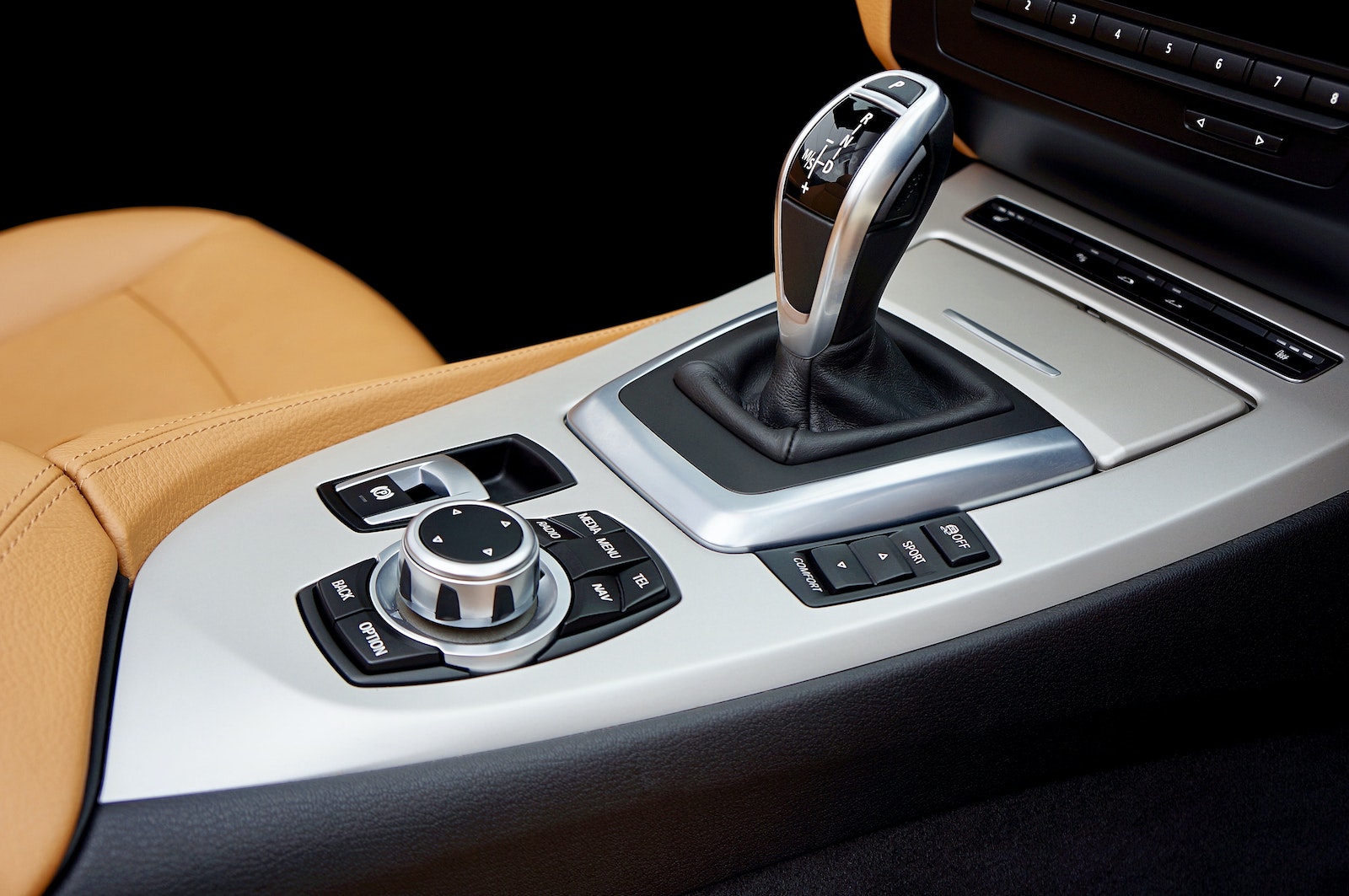
Manufacturers have also implemented ancillary electronics to adjust the shifting pattern of the transmission for the driver’s desired conditions from comfort/normal or sport. In comfort (or similar mode), the transmission will simulate the smoothness of a conventional automatic, sacrificing performance for a smoother drive. In sport mode, the tranny will behave like a manual, trading comfort for speed and aggression, hence is suitable for frisky driving up in the mountains or on a racetrack. All while keeping both hands on the wheel, allowing you to focus on steering work and leave the shifting to a machine, unless you choose to select gears yourself via paddles behind the steering wheel or +/- selectors on the shift knob.

The dual clutch transmission is not without its drawbacks of course. For one, the technology is still relatively new, hence, expensive for the manufacturer to modify their tooling for production, hence, more expensive for the end-user. It usually adds a significant premium to a car’s price. Second (and this is just hypothesis) due to the complexity of the system, there are more possible areas for wear and tear, will likely be more costly to maintain and repair compared to manuals and regular automatics. Add to the fact that dual-clutch transmissions are commonly used for high-horsepower engines on high-performance cars meant to be driven hard and fast, then that risk could increase a bit more.

So will the highly advanced, best-of-both-worlds dual clutch transmission replace the synchromesh manual, conventional automatic and continuously variable transmission?

Well, back in the 1950’s and 60’s, it was common thought that we’d be living off of terra firma by now due to the pace of progress and innovation. Or, to hit closer to home, that internal combustion would already be phased out or that cars will drive themselves. In that light, I’d have to say no.

Dual clutch transmissions represent the next logical step in motoring; not so much to revolutionize the way we drive cars, but to maximize the potential of the current crop. That is, after all, the whole idea.

Mitsubushi Lancer Evolution X MR 2010

March 3, 2010

Evo X MR

I can end this story right here, but you know that doesn’t do justice to a car like this.

It’s rare to encounter a vehicle that exudes such visual attitude right from the dealer forecourt. The Evo X features a forward swept shark nose, blacked out front intakes, a slotted and vented aluminum hood, a widebody treatment, 18 inch BBS wheels with bright red Brembo calipers screaming through the spokes, finished off with the trademark tall spoiler, rear diffuser and twin tailpipes. I’ve never encountered a car that looks so unanimously good and with so much impact on the street.

Inside, the Evo X is quite straightforward. You’ve got a pair of Recaro seats to hold you in place, a baseball stitch shift knob, magnesium shift paddles, pedals and a steering wheel. It’s easy to get carried away about things like the excellent sound system (which is great, thanks to Rockford Fosgate), the safety features (there’s a lot of them, befitting such a fast car) or on how many cups it can hold, but that’s missing the point completely. The Evo is a performance machine. A hell of a good one.

If you’ve been living under a rock for the past 10 generations of Evolution, you should know by now that the Evolution is more than a regular Lancer with a bodykit treatment. The Evo is a wolf in wolf’s clothing. Mitsubishi engineered an all new 4B11T engine to power the X. With twin cams, 16 valves, MIVEC valve timing technology with a twinscroll turbo and intercooler, the Evo has plenty of power to go around. 295 horsepower makes a far stronger statement than any kind of PR-speak.

Fire up the engine for the first time and you hear a subdued growl. The exhaust system does everything it can to contain the sound of 295 horses to just about 50 of them. Personally though, I’d prefer to let as much of them be heard, but that’s a tuning question already.

Pull out to the street and the Evo somehow manages to change the way you drive. You begin to stalk other cars, taunting them to make a move so that you can make yours and show them exactly what 4.7 seconds to 100 km/h from a standstill looks like… or perhaps what the rear of the Evo X looks like. Either way, with the Evo X, most cars turn merely into moving chicanes. Cue evil smile here.

Being an Lancer Evolution means that every model that follows has an improvement over the previous one. The X is the culmination of everything that has been learned over 10 generations of evolution.

One marked change is the Evo X’s power delivery. Evo’s have been known for that familiar kick in the back sensation, letting you know the turbo has spooled up. With the 4B11T, that feeling has been replaced by a rapid but gradual surge at around 3000 rpm onwards. The relatively linear power delivery means it almost behaves as predictably as a naturally aspirated engine, but with the ultimate pace and power of a turbo.

The great thing about the Evo is its high performance four-wheel drive system, but in the Evolution X MR, Mitsubishi takes it to the next level with the debut of TC-SST, the brand’s first dual-clutch automatic transmission. If I spell out what each letter means, it’s most definitely a mouthful, but then again, it’s the new pride of the Evo line. With dual wet plate clutches (one for odd numbered gears, another for even numbered gears) that allow one gear to be engaged on the first clutch while the next gear is ready on the second clutch, making for quick, seamless shifts.

Armed with TC-SST, the Evo X can switch between any of 3 shift modes: Normal for daily driving duties, Sport for enthusiastic driving and, finally, S-Sport when you really want to drive seriously as it holds revs far longer. Of course, the fun is in S-Sport, so I engage it (while in “P”, push the TC-SST toggle forward for 5 seconds) and take the Evo X for a spin. Immediately, it’s easy to feel the change in the car’s demeanor as it holds revs higher and chooses gears more aggressively. Be prepared to go through your fuel tank when you use S-Sport though.

Another neat trick with TC-SST is launch control. While stopped, engage S-Sport, deactivate the stability control (ASC), step really hard on the brake, then rev up high. The 4B11T will rapidly jump up to 5000 rpm, and when its there, lift off the brake pedal. All four tires will light up and launch the car forward, drag style. Warning: use launch control wisely.

And then there’s the handling. Caress, flick or flog the 3-spoke steering wheel (for the first time, it’s no longer MOMO) into the corner, and the fighter-jet inspired, forward-swept nose of the Evo X points. Squeeze the throttle mid corner and the rear steps up to the plate, rocketing the car out of the turn. The suspension system really lends the heavier body some very sharp handling characteristics.

The X also has what could be one of the most advanced and intelligent 4-wheel drive control systems available: Super All-Wheel Control. The three famous settings to enhance the Evolution’s cornering abilities are still at the push of a button: Tarmac (dry, paved surfaces), Gravel (for wet or loose surfaces) or Snow… the latter only needed if you live somewhere with more than 2 seasons of weather.

The Evo X has become a lot more civilized than older ones, but there are still a few compromises in the name of performance, the biggest being ride comfort (try to avoid pockmarked streets) and fuel consumption (in city driving, it yields 4.5 km/l average). But seriously, if you’re going to buy an Evo X, or any Evo for that matter, comfort and fuel economy are pretty much low on the list of priorities. TC-SST is a little skittish in stop and go traffic (with a bit of drive line snatch) but I have to admit, it’s far better and more convenient than the traditionally stiff Evo clutch pedals.

During my stint with the Evo X MR, many have asked if I was sold on it, given the price of nearly 3.5 million pesos, especially with the 306hp Hyundai Genesis Coupe and 300hp Subaru Impreza STI costing far less. The Evolution X is an emotional purchase. If you really want it, you’ll get it. Logic does not apply. And besides, with the higher price tag, the Evo X has become a lot rarer and more coveted.

Yes, I want to get one. but too bad cant afford one lol

2011 Porsche 911 Turbo S Revealed

February 26, 2010

2011 Porsche 911 Turbo s

Porsche will be pumping out an additional 30hp in the newest 911 model dubbed the “911 Turbo S”. The new 2011 Porsche 911 Turbo S will debut at the Geneva auto show next week.

The new Porsche 911 Turbo S features the same goodies that can be had with the current 911 Turbo with the addition of 530hp and 516lb-ft of torque pushing the envelope even further. The Turbo S has an edge over the normal Turbo 911 by consuming the same amount of fuel (26.8 mpg avg.) yet improving performance where the 911 Turbo S can accelerate from 0 to 60 in 3.3 seconds via the PDK 7-speed double-clutch transmission (launch control enabled) and reach a top speed of 195mph. That would make the 911 Turbo S one of the most fuel efficient sports cars for its class.
The Porsche Turbo S will be available as a coupe and cabriolet (convertible) and go on sale in May of this year in European countries and expected to arrive in the U.S. later in 2010.

Specially modified car from Red Bull Racing

February 24, 2010

To help celebrate the return of F1 to Canada, Scuderia Toro Rosso driver Sébastien Buemi raced a specifically adapted car over ice courtesy of Red Bull Canada. Racing has never been cooler as Buemi put rubber to ice, speeding across an icy lake just outside of Montreal, QC for the ultimate winter drive!

In order for this chilling thrill ride to go down, Red Bull Racing revved up some exclusive adjustments for Buemi’s car from the ground up. The specially modified Red Bull Racing Formula One car was fitted with Bridgestone Potenza F1 snow tires to ensure the best possible traction. These exceptional Bridgestone F1 snow tires, produced by Bridgestone Motorsport’s Technical Centre in Tokyo, featured 420 studs on each of the front tires and 588 studs on each of the rear tires.

Got your wheels spinning? Catch the video of this chiller drive at this Link

Jaromir Cech Talks FT-86

February 23, 2010

YouTube Preview Image

The senior designer of the FT-86 project Jaromir Cech talks to Autocar UK about the design philosophies and ideals behind the European-designed Toyota concept. Interesting to see the enthusiasm for the concept to go directly into production ‘as-is’ from Toyota Japan’s directors, with the hope of not changing much (if anything) from the concepts exterior look. Lets hope they can get it past pedestrian safety checks and onto the road!

Body Kits are becoming the new trend in the aftermarket

February 22, 2010

jdm integra Body Kits are becoming the new trend in the aftermarket

As far as trends go, the import movement had it’s fair share of cars that were sporting body kits, but almost all of them also had some kind of performance modification.  Cars would have exhaust systems, intakes, nitrous, and various other things, because it was still the fastest that held got the respect at the local street races.

As times change, and cars become more expensive to modify, the economy doing poor, and people afraid of ruining their warranty, the shift has been toward body kits such as front bumpers, rear bumpers, side skirts, fenders, wings and the such.  Body kits are looking better as technology improves, has better fitment, and almost no worry of any sort of cracking due to superior technology.

What do you think? Have you noticed any shifts in trends? Are people in your area still more go than show?

Next Page »